Minister_of_Culture Launches the “Cultural Capital” and “Talaqi for Innovation and Entrepreneurship” Platforms at Capital University

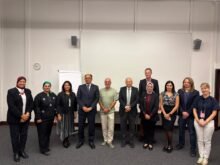
In a meeting that brought together the legacy of history and a vision for the future, prof. Al-Sayed Qandil, President of Capital University, visited prof. Abdulaziz Qanswa, Minister of Higher Education and Scientific Research and Acting Minister of Culture, at his office in the Supreme Council of Culture.
During the meeting, prof. Sayed Qandil, President of the University, presented two pioneering digital platforms that embody the University of the Capital’s role in preserving national memory, supporting innovation, and linking scientific research to industry and society.
prof.. Abdel Aziz Qanswa, Minister of Higher Education and Scientific Research and Acting Minister of Culture, launched the “Capital Cultural Platform,” making it the first integrated cultural platform for Egyptian universities. The platform documents the history, heritage, landmarks, museums, and collections of the Capital University, making them accessible to current and future generations in a modern digital format ,emphasizing that the focus on such events and initiatives reflects the important role universities play in preserving national identity and memory, supporting culture and innovation, and linking scientific research to the needs of society and industry.
For his part, Dr. Al-Sayed Qandil emphasized that the university believes in the importance of its role not only as an educational institution, but also as a hub for knowledge, culture, and innovation, and as a partner in human development and service to the nation, It also believes it has a responsibility to preserve its history and symbols, while at the same time investing in the potential of its students, so that it may play a meaningful and tangible role in shaping the future and bridging the gap between education, scientific research, culture, and the needs of society.
The platform tells the university’s story through three interconnected main themes:
The university’s historical narrative, from its earliest beginnings as the “School of Operations” established by Muhammad Ali Pasha, through the various stages of its development and its declaration as Helwan University in 1975, up to the issuance of the presidential decree changing its name to “Capital University.”
The university’s icons, by introducing a select group of its distinguished figures and pioneers across 11 disciplines in various scientific, artistic, cultural, and athletic fields, and highlighting their outstanding contributions and achievements.
Its impact on the Egyptian consciousness and identity, by documenting the university’s role and its prominent figures in raising awareness, shaping cultural and artistic identity, and contributing to the development of and service to our beloved homeland, Egypt.
The meeting also witnessed the launch of the “Talaqi Platform for Innovation and Entrepreneurship,” which considered as the first Arab platform aiming to support innovators and entrepreneurs, connect scientific research with industry needs, transforming ideas and research into practical solutions that serve society and contribute to economic development.
The platform includes 30 applied tracks covering the university’s various disciplines, thereby contributing to the localization of technology, accelerating the transfer of innovations from the laboratory to practical application, supporting the knowledge-based economy, and strengthening the university’s role as an active partner in