AUC LAUNCHES AI@AUC, A UNIVERSITY-WIDE INITIATIVE TO ADVANCE RESPONSIBLE AI ADOPTION AND INNOVATI

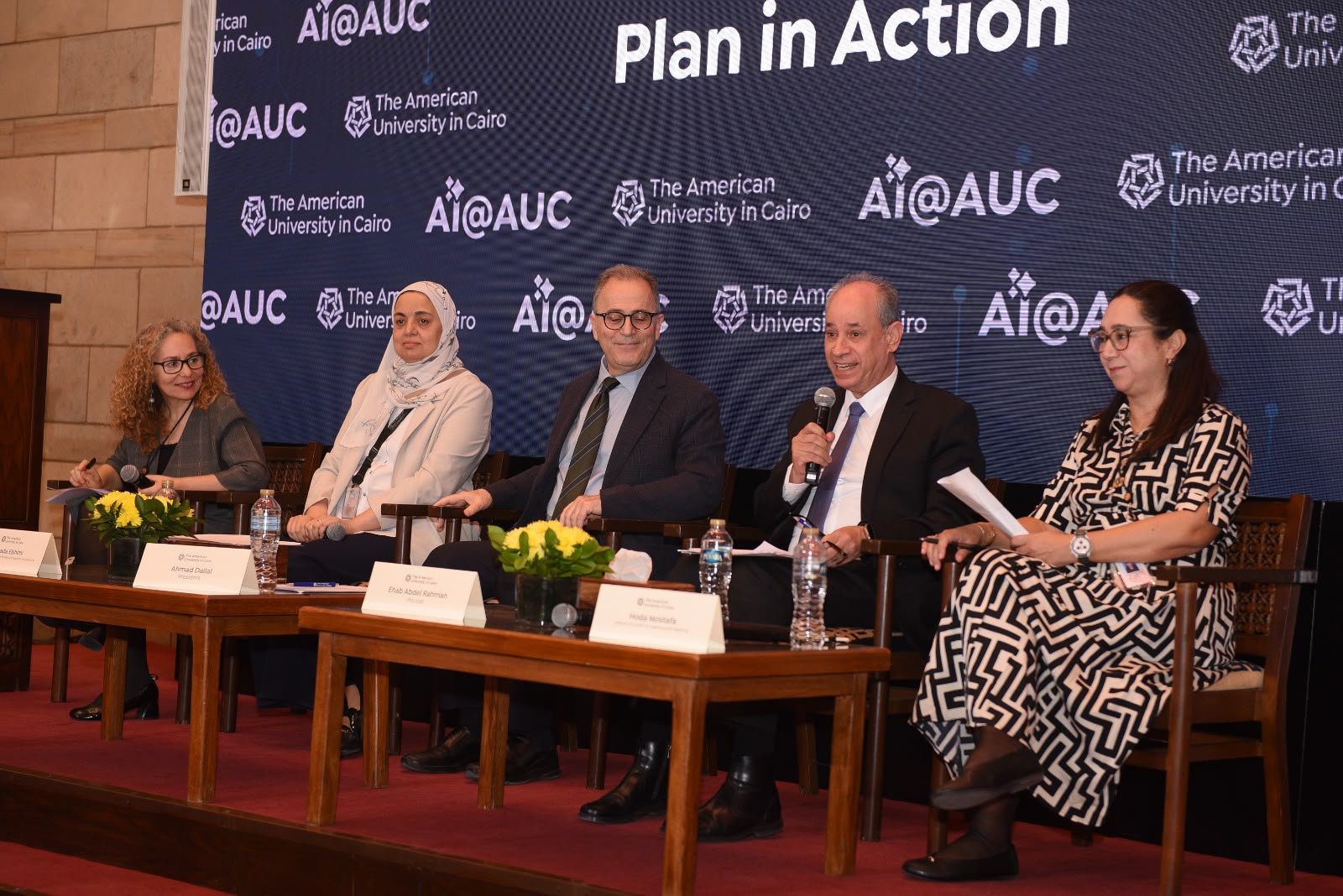
– The American University in Cairo (AUC) has launched AI@AUC, a university-wide initiative to guide the responsible integration of artificial intelligence (AI) across teaching, learning, research and university operations. Building on the University’s existing work and academic strengths, the initiative establishes a coordinated approach that encourages innovation and experimentation while upholding academic integrity, human judgment and ethical responsibility.
“Artificial intelligence is reshaping how we create knowledge, teach, learn and work. At AUC, we see this as an opportunity to advance our academic mission and uphold our institutional values. Through AI@AUC, the University aims to serve as a thoughtful leader and model for higher education, demonstrating how AI can advance innovation while upholding critical inquiry, intellectual independence, creativity and academic integrity. With a comprehensive framework spanning teaching, learning, research and university operations, AUC seeks to contribute to shaping how higher education institutions adapt to AI while preserving the quality and integrity of education,” said AUC President Ahmad Dallal.
AI@AUC is organized around four pillars that reflect the main areas of university life: Teach, Learn, Research and Work. Teach offers faculty resources and guidance on teaching with AI. Learn helps students use AI effectively and responsibly in their studies. Research provides researchers and scholars with resources, tools and guidance to explore AI’s potential in advancing their work. Work provides faculty and staff with tools, policies and resources to integrate AI into their professional
roles.
“Ethical use of artificial intelligence presents significant opportunities to strengthen academic work, advance research and improve the way universities operate. Realizing this potential requires a thoughtful, coordinated approach that places academic quality and responsible use at the center,” said AUC Provost Ehab Abdel-Rahman. “AI@AUC builds on the expertise and initiatives already underway across the University and provides a shared framework for moving forward. Our goal is to enable our community to explore AI’s possibilities, understand its limitations and make informed decisions about when and how to use it, while ensuring that human judgment and accountability remain central.”
AUC has been actively engaged in artificial intelligence through various initiatives and efforts across the University for several years. To build on this work and establish a unified direction for the future, the University formed a university-wide task force last year, bringing together stakeholders from across campus to develop a comprehensive AI strategy and action plan aligned with AUC’s mission and academic priorities. As the strategy moves into implementation, AI@AUC provides an overarching framework to coordinate these efforts, build on existing expertise and strengthen the University’s capacity to engage with and leverage AI responsibly.
Responsible use is at the heart of AUC’s approach. The University’s Guidelines for Responsible Use of Generative AI are grounded in seven core principles: mission alignment, ensuring that AI serves the University’s values and objectives; human-centered design, keeping human judgment, oversight and accountability central; AI literacy, building the knowledge and skills needed for meaningful engagement; ethical use, prioritizing fairness, transparency, privacy, security and academic integrity; transformational purpose, pursuing demonstrable positive impact; adaptability, tailoring approaches to different needs and contexts; and continuous improvement, ensuring that policies and practices evolve alongside emerging technologies. Together, these principles provide a foundation for responsible innovation, helping the University harness AI’s potential while mitigating risks and protecting data. The guidelines will be reviewed and updated regularly as the technology continues to evolve.
AI literacy and education are also fundamental to the initiative. AUC will organize programs for faculty, students and staff to deepen their understanding of AI and to create opportunities for critical discussion about its implications. These efforts will support a shared institutional understanding of the technology while encouraging informed experimentation, responsible innovation and continued dialogue across campus.
“At the undergraduate level, our responsibility is not simply to prepare students to use emerging technologies, but to help them understand, question and evaluate them,” said Ghada Elshimi, dean of Undergraduate Studies and the Academy of Liberal Arts. “An education grounded in the liberal arts develops the critical thinking, communication, creativity and ethical reasoning students need to navigate a world increasingly shaped by AI. Through AI@AUC, we can help students explore these tools while strengthening their ability to think independently, assess information carefully and take responsibility for their own work.”
Highlighting the importance of supporting faculty in adapting their teaching practices to the evolving AI landscape, Hoda Mostafa, director of the Center for Learning and Teaching and professor of practice, said: “Artificial intelligence offers an opportunity to rethink how we teach and how students learn. At AUC, we are committed to supporting faculty in exploring AI tools and integrating them thoughtfully into their teaching practices as appropriate to create more engaging and effective learning experiences. Our priority is to ensure that technology enhances the learning process and ensures learning gains while keeping critical thinking, active engagement and meaningful interaction at its heart.”