The German University in Cairo discusses the future of design education in the age of artificial intelligence.

The Faculty of Applied Sciences and Arts at the German University in Cairo (GUC) organized a specialized academic symposium that focused on the future of design education and current challenges in light of the growing relationship between technology and craftsmanship.
The event brought together distinguished academics, industry experts, and design students.
The symposium was structured around two parallel thematic tracks: “Artificiality” and “Tangibility.” The first track examined the impact of artificial intelligence on the future of the design process, while the second focused on the importance of craftsmanship, manual skills, and physical experimentation in building the designer’s identity and deepening his understanding of the context and his awareness of the surrounding environment and the cultural and functional factors that affect design.
The event featured interactive panel discussions, as well as a distinguished exhibition showcasing selected graduation projects by the Class of 2026 in Graphic Design, Media Design, and Product Design.
The exhibition reflected a high level of creativity and a forward-looking design vision that combines innovation with social responsibility.
At the conclusion of the symposium, participating experts agreed that artificial intelligence serves as a supportive tool that enhances efficiency, optimizes workflows, and aids decision-making, without replacing human expertise. Rather, it empowers designers to focus on strategic thinking, creativity, and critical analysis.
They also stressed the importance of adaptability, openness, and lifelong learning for students to keep pace with rapid transformations.
Discussions further highlighted the need for the educational process to focus on teaching students the fundamental ideas and core principles of design over rapidly evolving technical tools.
This ensures that students maintain strong critical and creative thinking skills regardless of technological advancements. Speakers reaffirmed that the human element remains central to the design process, as a designer’s ability to understand context, comprehend user needs, and make responsible, informed decisions cannot be replaced by technology.
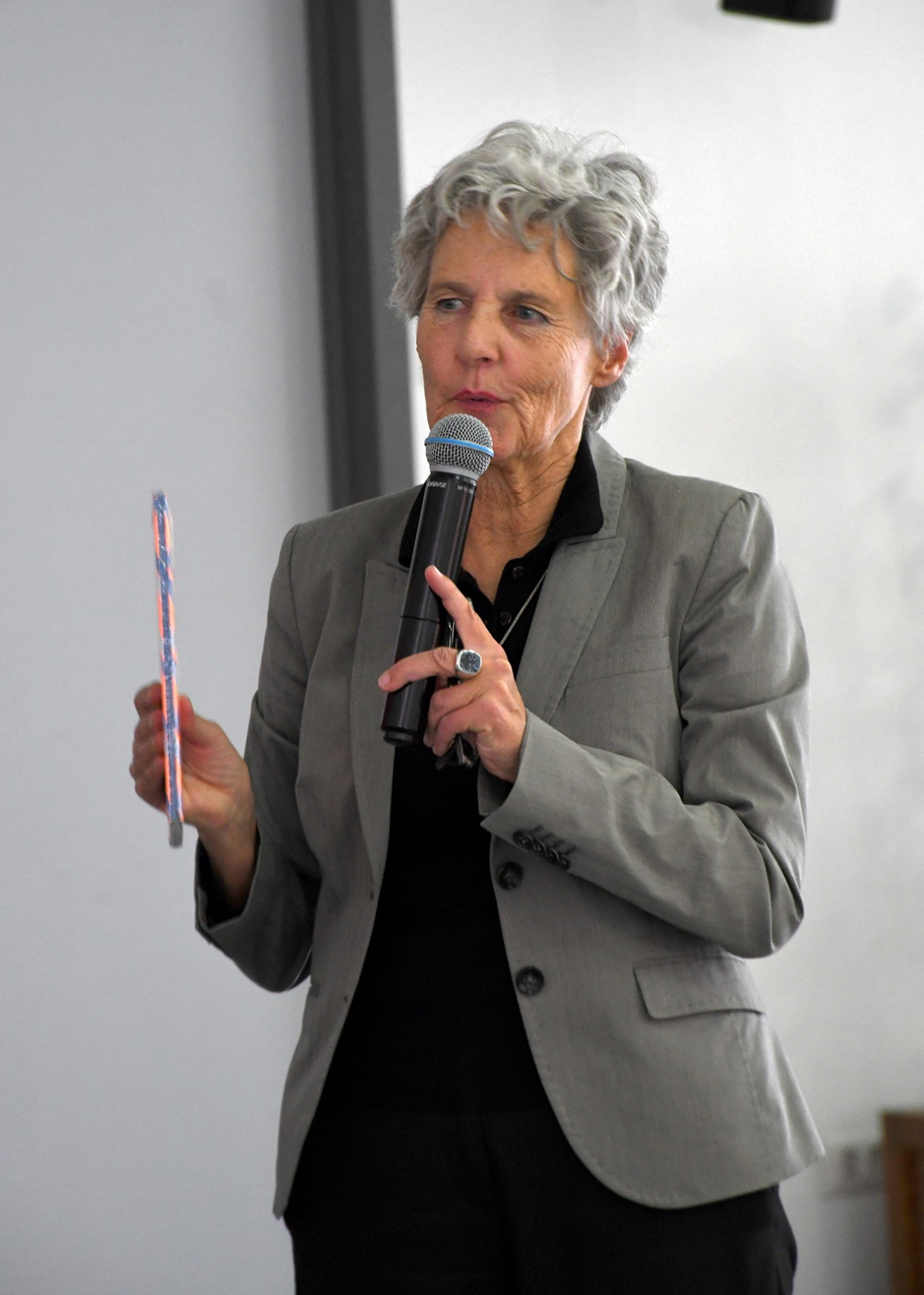
In her remarks, Dr. Sabine Müller, Dean of the Faculty of Applied Sciences and Arts at GUC, emphasized that contemporary design education is built on the integration of technology and craftsmanship. She noted that artificial intelligence should be utilized as an empowering tool that enhances designers’ capabilities without diminishing their creative role.
“Our goal is to graduate designers with global awareness and a deep understanding of local context—professionals capable of critical thinking, creativity, and responsible innovation in a rapidly changing world,” she stated.
She further added that the Faculty offers comprehensive academic programs across three main design disciplines—Graphic Design, Media Design, and Product Design—aimed at preparing a new generation of designers capable of competing internationally while remaining connected to their cultural identity.
The symposium, she affirmed, reflects the University’s commitment to advancing a contemporary educational framework that keeps pace with technological developments while preserving the essence of design as a fundamentally human and creative process.